
As an Amazon Associate I earn from qualifying purchases and sometimes recommend products from other sellers at no extra cost you. For more details see my disclosure policy and privacy policy.
There are haunted castles, and then there’s Glamis. Standing in the rolling Angus countryside of Scotland, this turreted fortress doesn’t just have a ghost story or two — it has an entire roster of resident spirits, centuries of dark legend, and a secret so well-kept that even members of the royal family reportedly went to their graves without knowing it. If you’ve ever wanted to visit a place where the hauntings feel genuinely woven into the walls, Glamis Castle is hard to beat.
The castle traces its history back to 1372 and has been the ancestral home of the Earls of Strathmore and Kinghorne ever since. It’s also deeply tied to Scotland’s royal story — Queen Elizabeth The Queen Mother spent much of her childhood here, and Princess Margaret was born within its walls in 1930. Shakespeare even used it as the setting for Macbeth, which tells you something about the atmosphere the place projects. All of this history, layered on top of each other across more than 650 years, makes Glamis one of the most storied buildings in the British Isles — and one of the most haunted.
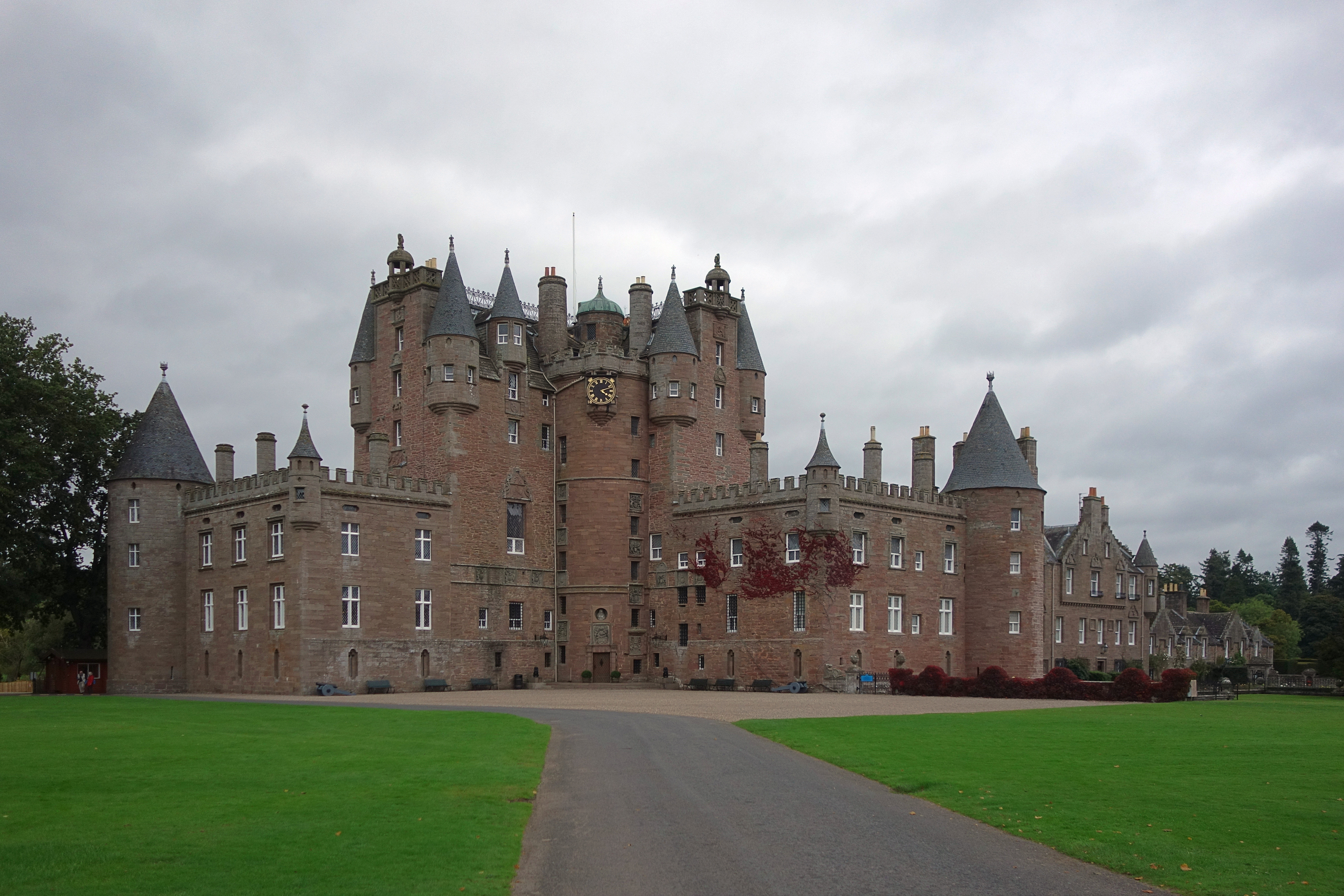
A Castle Built on Centuries of Darkness
To understand the hauntings at Glamis, it helps to understand just how much has happened here. This isn’t a building that sat quietly through the centuries. Kings visited, battles were fought nearby, accusations of witchcraft were levelled at its inhabitants, and enough family drama unfolded within its walls to fill several novels. All of that leaves a mark — or so the paranormal tradition would have us believe.
The castle’s association with Shakespeare’s Macbeth gives it a cultural weight that few buildings can match. Even if you set aside the ghost stories entirely, you’re still standing in a place where Mary, Queen of Scots once walked, where James V came to visit, and where the destiny of the British royal family was quietly shaped over decades. That’s a lot of accumulated history for one building to carry.
For believers in the paranormal, all of this history provides fertile ground. The idea that places can absorb the emotional energy of events — the grief, the violence, the joy, the fear — is central to how many people understand hauntings. Glamis has certainly seen enough of all of those to keep things interesting. If you’re curious about how this fits into the broader picture of what makes a location haunted, the sheer variety of phenomena reported here is a good starting point.
The Famous Ghosts of Glamis Castle
The Grey Lady
The most frequently reported apparition at Glamis is the Grey Lady, said to be the spirit of Lady Janet Douglas, who met a particularly grim end in 1537. She was accused of witchcraft and treason against King James V — charges that many historians believe were politically motivated rather than grounded in any real evidence. She was burned at the stake on Castle Hill in Edinburgh, and according to legend, her ghost returned to the castle where she had once lived.
She’s most often seen in the chapel, sometimes kneeling in prayer, sometimes simply drifting through. Whether you believe in ghosts or not, there’s something poignant about the story — a woman executed on dubious charges, her spirit apparently still unable to find peace five centuries later. The Grey Lady has something in common with other famous phantom women found across paranormal folklore worldwide; if you’ve read about the White Lady ghost, you’ll recognise some familiar themes about female apparitions tied to tragedy and injustice.
Earl Beardie and the Devil’s Card Game
If the Grey Lady is Glamis’s most poignant ghost, Earl Beardie is its most dramatic. The legend goes that Alexander Lindsay, the 4th Earl of Crawford (known as “Earl Beardie” on account of his impressive facial hair), was so desperate for a card game one Saturday night that he made a deal with the Devil himself when no one else would play with him. The Devil appeared at the castle door, the two settled in for a game, and as punishment for his blasphemy, Earl Beardie was condemned to play cards in the castle forever.
Visitors and staff have reported hearing the sounds of dice rolling and cards being slapped on tables from a sealed room within the castle for generations. Some accounts describe the noise as accompanied by cursing and thumping — apparently the Earl hasn’t mellowed with time. The legend taps into a deep vein of folklore about deals with the Devil and what happens when you break the Sabbath; similar tales appear across Scotland and much of northern Europe. It’s the kind of story that would fit neatly into any history of ghost stories and folklore.
The Monster of Glamis
This is the legend that has kept curiosity about Glamis burning for well over a century. The story goes that somewhere within the castle walls, there is a hidden chamber — and inside it, for generations, the Strathmore family kept a terrible secret. The “Monster of Glamis” is said to have been a hideously deformed heir, born so disfigured that the family couldn’t allow him to be seen, and so kept him hidden within the castle for an unnaturally long life — some versions of the story suggest he lived well into old age, never seen by the outside world.
The legend was supposedly so closely guarded that only the Earl, his heir on their coming of age, and the family lawyer were ever told the truth. Women were never told, which explains why the Countess of Strathmore once said she was glad she didn’t know the secret, because it had cast a shadow over her husband’s life. Several people have claimed over the years to have found the hidden room, only for their accounts to be quietly dismissed.
Sceptics point out that the story is almost certainly embellished — buildings of this age and complexity naturally contain sealed rooms and forgotten passages, and a good mystery tends to attract increasingly elaborate explanations over time. But the fact that even family members have hinted at something unusual does keep the question alive. We may never know the truth, which is probably exactly why the legend endures.
Other Reported Phenomena
The three main legends are only part of the picture. Glamis has accumulated a rich collection of other reported experiences over the centuries, including:
- A tongueless woman seen running across the grounds, pointing at her mouth in mute horror — thought to be a servant who witnessed something she was never meant to see
- The Black Boy, a young servant sometimes seen sitting outside the Queen Mother’s bedroom, whose origins are unclear
- A knight in armour spotted in some of the older rooms
- The ghost of a tall man in a long dark cloak, seen in the park surrounding the castle
What’s interesting about this range of phenomena is how it reflects the social history of the castle as much as its aristocratic one. Servants, children, and unnamed victims appear alongside earls and ladies. If the paranormal tradition is to be believed, Glamis is haunted not just by its famous residents but by everyone who lived and suffered within its walls — which is perhaps a more honest way to think about any historic building.
You might notice that Glamis features in our roundup of Scotland’s most haunted castles, where it consistently ranks among the most compelling locations in the country.

The Science vs the Stories
It’s worth pausing to consider the sceptical view, because Glamis is exactly the kind of place where the power of suggestion can run riot. Visitors arrive already primed with expectations of ghostly encounters, the building is genuinely old and atmospheric, and the architecture — with its towers, thick stone walls, and maze-like layout — is perfectly designed to produce the strange sounds and shadows that the human brain tends to interpret as paranormal.
Cold spots, which are frequently reported in old stone buildings and sometimes interpreted as signs of ghostly presence, have a range of straightforward explanations involving air movement, thermal mass, and the way old buildings manage (or fail to manage) heat. If you’re curious about what the evidence actually says, what are cold spots? breaks down both the paranormal theories and the scientific explanations in some depth.
That said, the sheer volume and consistency of reports from Glamis over several centuries does give pause. When different people in different eras report similar experiences — hearing the same sounds in the same rooms, seeing similar figures in the same locations — it’s harder to dismiss entirely as coincidence or suggestion. The honest position is probably one of uncertainty: we can’t prove the place is haunted, and we can’t fully explain everything that’s been reported there either.
The Ghosts of Glamis Tours
For those who want to experience the castle at its most atmospheric, Glamis Castle relaunched its annual Ghosts of Glamis event in October 2024, running across the last week of the month. The event included new family-friendly storytelling sessions alongside the existing ghost tours, with participants taken through rooms and staircases not usually included in the standard visitor experience. If you’ve been on ghost tours at other locations, the approach here feels genuinely considered — it’s less about jump scares and more about atmosphere and history.
Ghost tourism has become a significant part of how old buildings sustain themselves financially, and there’s nothing cynical about that. If anything, the growing interest in paranormal tourism is helping to preserve buildings that might otherwise struggle for funding. Haunted hotels, in particular, have found that leaning into their supernatural reputations can be enormously good for business — something explored in more depth in this look at checking in with the unseen.
Visiting Glamis Castle
Glamis Castle is located in Angus, Scotland, easily accessible from Dundee and not far from Aberdeen. The castle opens to visitors seasonally, and the grounds and gardens are worth exploring even if you’re not particularly interested in the ghost stories. The architecture alone — a fairy-tale arrangement of towers and turrets that looks almost impossibly picturesque — justifies the trip.
For those who want to dig deeper into the paranormal side, the official ghost tours run during the season, and the Ghosts of Glamis events around Halloween offer the most immersive experience. Booking in advance is advisable as these tend to fill up quickly.
Ghost hunting events are also sometimes run at the castle by third-party companies. If you’re thinking about attending something like that, it’s worth understanding the difference between a formal paranormal investigation and a more entertainment-focused ghost hunt — something that this breakdown of paranormal investigations vs ghost hunting covers well.
Final Thoughts
Glamis Castle occupies a rare position in paranormal folklore — it’s not just a building with a few ghost stories attached, but a place where the legends have become genuinely inseparable from the history. Whether you believe the Grey Lady still kneels in prayer in the chapel, whether Earl Beardie really plays cards somewhere behind a sealed wall, and whether the Monster of Glamis was ever real, the stories themselves tell us something true about the people who lived and died here. They reflect centuries of fear, injustice, and the very human tendency to make sense of what we can’t understand.
If you’ve always been curious about Scotland’s paranormal reputation, Glamis is as good a starting point as any. It’s a place that rewards both the believer and the sceptic — there’s enough genuine history here to satisfy anyone, and enough unexplained legend to keep the conversation going long after you’ve left.
Continue Your Journey:
- 12 of the Most Haunted Castles in Scotland — Glamis in context with Scotland’s other spectral strongholds
- The White Lady: A Global Ghost Story — The worldwide phenomenon of female apparitions tied to tragedy
- The History of Ghost Stories: Folklore and Urban Legends — Where legends like those at Glamis come from
- Ghosts Across Cultures: A Global Look at Supernatural Beliefs — How different cultures interpret the same kinds of experiences
- What Type of Ghost is Haunting Me? — A guide to the different kinds of paranormal entities reported worldwide
Have you visited Glamis Castle? Did you experience anything unusual — or were you more struck by the history than the hauntings? Share your thoughts in the comments below.
If you enjoy exploring the paranormal, sign up for the Weird World newsletter for new posts, investigations, and the strange stories that don’t make the mainstream news.